Related Articles


 Related Articles


March 2003 IBEW
Journal Active on the front lines—and behind the scenes—IBEW organizers play a critical role in labor’s ongoing battles for the right of working people to join a union and seek justice on the job. The Brotherhood deploys hundreds of skilled, dedicated organizers in the campaign on behalf of workers. There is a construction organizing staff and a special projects staff at the International Office to coordinate organizing in all branches of the Brotherhood. Each district has both a construction and industrial organizing coordinator as well as a temporary outside construction organizer. Nearly all construction locals in the IBEW have full-time organizers. And more and more locals in utilities, manufacturing and telecommunications are employing full-time or part-time organizers. The International also assigns some International Representatives to organizing and hires part-time organizers.
For a glimpse at the role of these dedicated individuals—what the job entails, obstacles encountered and the hard work involved—several organizers were asked to relate their insights and organizing strategies. Following are reports from: a construction organizer in Richmond, Virginia; residential organizers from Toronto, Ontario; and a Third District International Representative assigned to organizing campaigns in New York, New Jersey, Delaware and Pennsylvania. International President Edwin D. Hill stresses that organizing is the absolute primary goal of the IBEW and a responsibility of every local. "We must light the fire of organizing all across the United States and Canada, up in Alaska and across the Pacific to Hawaii, the Island Territories and down to Puerto Rico," President Hill told the delegates to the 36th IBEW International Convention in 2001. "Organizing goes hand in hand with our effectiveness in the public arena. A well organized union is one that can make its voice heard and can legitimately claim to speak for the majority of workers in the industry." Organizers and union members know there is power in unity, strength in numbers. They know labor unions fight for issues important to working people—to make workplaces safe, protect Social Security and retirement, gain quality health care, hold corporations accountable and secure economic justice. They know union members earn higher wages and better benefits, are more productive and have greater job security than nonunion workers; that workers form unions so they can have a unified voice to improve their lives, their families and their communities. They also know that hostile employers routinely interfere with workers’ freedom to choose a union and that corporate forces wield powerful anti-worker influence. "We’ve got to spread the message of unionization and economic justice to more workers, so they feel the same motivation that existing union members do," wrote President Hill and International Secretary-Treasurer Jerry J. O’Connor in the December 2002 Journal. "Then and only then will elected officials respond to the needs of the vast majority of people, not just the privileged few." IBEW organizers are out in full force working long hours every day toward that critical goal. It’s a tough job with countless hurdles. Still, organizers stay the course, help score important gains and continue the quest to bring union representation to all electrical workers. The job requires dedication, determination and skill—qualities IBEW organizers exhibit in full measure.
Construction Organizing in the South IBEW Local 666, Richmond, Virginia, has a strong construction organizing team. Butch Vest and Benny Sowers are full-time organizers at the inside local and Bud McGuinn, organizer/business agent, shares office duties and interviews membership applicants at the union hall. The local’s jurisdiction covers 25 counties in Virginia, encompassing a 60-mile radius surrounding Richmond, a very conservative part of the country where trade union roots don’t run deep. "We have a membership of about 1,500, which is approximately 35 percent of the electrical work force in our jurisdiction," said Vest, who filed the following examples of what the local’s organizing team is doing to build membership. n Communicate With Bordering Local Unions: "We get to know the organizers in our neighboring locals and share information nearly every day on contractors’ jobsites and employees, as well as local newspaper job listings. n Review Trade Publications to Learn About Upcoming Jobs in Jurisdiction: "We monitor the CMD Bulletin and the Dodge Report daily to see what work is being bid and who the successful bidders are. Locals share this information so we all know what work the nonunion contractors are doing in each other’s jurisdiction. n Get Membership Involved in Organizing Activities: "A Local 666 by-law requires members to serve eight hours with the local annually. We encourage members to meet that requirement by attending COMET classes, hand-billing jobs and, on occasion, submitting job applications to nonunion contractors. "Organizers recently learned that a large nonunion contractor was awarded a big contract in our jurisdiction and would hire 200 electrical workers. The contractor ran an ad in several newspapers outside our area stating the time and place to apply. Neighboring locals sent us copies of the ad and asked if they could help. On the given date, 237 IBEW electricians from three local unions were standing in line when the door opened. The company called the police and the fire marshal came. The company wound up distributing all the available applications to union applicants. When hiring started, none of the union applicants were contacted and we filed unfair labor practice (ULP) charges. The job was later shut down for other reasons." n Train and Deploy Salts: "The Local 666 salting program utilizes unemployed members to work on nonunion jobs as salts. Organizers select the job to be salted and coach the salts on their tasks. n Utilize Web Site and Distribute Handbills: "We handbill several jobsites each week. Our handbills include the local’s web address and the web site offers a form anyone can access to request more information about the union. n Conduct Raffles to Obtain Information: "Organizers worked out a deal with a tool company to give the local a deal on several sets of tools for a raffle. With the company’s permission, we printed tickets featuring the toolmakers’ logo. We went to nonunion jobsites and invited employees to fill out tickets for a chance to win the tools, and we placed tickets in electrical supply houses. Hundreds of names were obtained and we mailed a Local 666 newsletter featuring a photo of the raffle winner to the nonunion workers. n Plan Jobsite Cookouts as Outreach Tool: "Working with the building trades on several large nonunion projects, we needed a way to reach out to many workers quickly. A jobsite cookout at a 150-worker site was the answer.
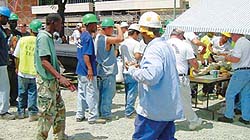
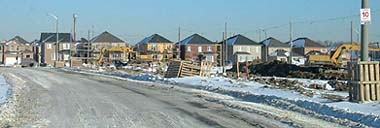
"Very early on the day of the cookout, organizers spread flyers over the jobsite inviting workers for a free hot dog. At 11 a.m. we rolled up with a large cooker and started grilling. While the workers waited in line for food, organizers talked to them and distributed information about the union," Vest said. "The general contractor called the police, but by the time officers arrived, we had fed most of the workers. Police asked us to pack up and leave—but only after the cooker had cooled off. We told the police this was a labor dispute. The seven officers conceded they didn’t know anything about labor law and agreed to meet with us if we would teach them. We agreed and the police all ate hot dogs. After lunch was over they determined the cooker was cool enough to move safely. We have done several cookouts and all were a success. n Implement Political Involvement: "More than 20 power plants are proposed for construction in Virginia, with several planned for our jurisdiction. Local 666 members and the building trades have attended many town and state planning meetings, either to support union labor for these projects or to oppose a plant if nonunion labor is to be used. We put together a PowerPoint presentation for county supervisors showing how unions would train local people and benefit communities. n Use Radio Advertising: "We use radio ads to attract membership applicants. Some spots stress union health care benefits. Other ads inform the public of a state law requiring electrical workers to be licensed and state the IBEW offers the best training and the most qualified electricians," Vest said. Reclaiming the Residential Market in Toronto Toronto Local 353 has built a solid track record reclaiming the residential construction market in the midst of a big Toronto housing boom. Organizers Tony Chiappetta, Rudy Lucchesi and Barry Stevens, business representative, described the local’s ongoing seven-year campaign aimed at this critical sector of the industry. "Continuing the commitment to keep organizing and take it to another level, the local hired a fourth organizer, Nino DiGiandomenic, in mid-January," Chiappetta said. "In June 1996, Local 353’s percentage of the market share in low-rise residential construction was zero," said Stevens. "Under the guidance of Business Manager Joe Fashion, Local 353 aimed to turn that situation around." Nonunion contractors typically use the residential area as a training ground to gain a toehold in the construction industry, frequently gaining market share and moving into commercial and industrial construction. Local 353’s plan to recapture the market was simple. The union hired Stevens and another full-time organizer to go after the low-rise house wiring industry. When organizing began, most electricians in the housing sector received $10 to $12 per hour less than the unionized sector’s base rate and did not receive any benefits. Organizers targeted the eight largest electrical contractors in the region, asked the workers to sign authorization cards and then conducted a surprise certification blitz. They visited jobsites, acquired phone numbers and addresses, and created literature to build the campaign message. A worker steering group was formed. They held rallies to create solidarity among the workers. "We challenged the workers to understand the lack of fairness in the workplace," said Stevens, one of the organizers hired in 1996. "Organizing is not about being a good talker—it’s about the ability to communicate," he said. "To gain credibility and trust, our honesty had to be above reproach. We prepared the electricians for their election day. And it worked!" By mid-August 1996, applications to certify major electrical contractors were put forward and elections were held. Electricians voted for the union by resounding majorities of more than 80 percent. By February 1997, the local had certified Toronto’s top 15 residential contractors. More than 450 electricians were organized in a short period of time. Local 353 did not stop organizing after the initial push. Two additional organizers, Chiappetta and Lucchesi, were hired—brothers who themselves were brought into the union during the first wave of organizing. "They have continued to organize, strip and in general grow our market share by another 5 to 10 percent," Stevens said. Organizers explain the importance of organizing to new members: higher market share equals better negotiated settlements. "Only because our new low-rise members know that organizing protects their jobs is continued union growth possible," Stevens said. Electricians can see the proof of this reality. In 1997 the first negotiated settlement was for a $29.95 total package. Today it is $38.42 and the market is still healthy. From June 1996 to 2003, union members have experienced an average increase of $20 in wages and benefits, Stevens said. "That is delivering the goods!" "In the greater Toronto region more than 40,000 new homes will be built in 2003—and 85 percent or more of those houses will be IBEW-wired by qualified union electricians," Stevens said. By organizing in the low-rise sector, the union effectively cut off the supply of cheap labour to other segments of the industry. No longer would low-rise residential be the nonunion training ground for cheap labour. "We continue to strip good workers from the unfair employers, keeping nonunion contractors marginalized and unable to grow," Stevens said. Companies that signed on voluntarily, however, have grown and attracted additional workers. One such company began with two workers and now employs 30 Local 353 members. Local 353 also has a well funded Stabilization and Market Recovery Fund. Such tools help the local put pressure on unscrupulous contractors that try to steal union work. "In 1997 we had approximately 450 low-rise members, and today we have well over 700," Chiappetta said. Third District Organizer: ‘This Is Not a One-Person Show’ Organizer Brian Brennan, Third District international representative, coordinates and assists IBEW local union organizing campaigns throughout the district’s four-state region: New York, New Jersey, Delaware and Pennsylvania. He is involved with organizing in every industrial branch of the Brotherhood and a typical day for him includes long hours and extensive travel. "How often do our rank and file union members drive by a jobsite, give a quick glance and continue to drive on wondering if the job is being performed by union labor?" Brennan said. "A five-minute detour to ask questions and discuss union advantages can make a big difference in the future of many nonunion workers," he added. "Most people will not volunteer information and tend to keep to themselves—but if they’re approached and asked questions about their work environment, they often volunteer information that lets us know whether or not they want to be organized." With so many targets and so many workers looking for a better way of life, Brennan said, it can be hard to determine which groups to concentrate on and follow through with by launching an organizing drive. No two campaigns are alike, Brennan said. "Every drive we undertake will differ from any other campaign we had before. The key is to make the necessary adjustments, follow through with commitments and keep communications open at all times." "Organizing is not a five-days-a-week, eight-to-five job—it’s a 24/7 job," Brennan said. "Total commitment is the main ingredient to a successful conclusion in any campaign." Another key ingredient, he said, is cooperation and assistance from other locals and representatives, along with support from every level of the IBEW. Brennan is coordinating a Third District organizing drive at PECO Energy/Exelon of eastern Pennsylvania. "We filed for an election with PECO’s distribution group in September 2002 and are awaiting a decision to determine the bargaining unit," he said. "Meanwhile, we are actively organizing the nuclear and fossil generation groups, and many IBEW locals are assisting" on the campaign. "This is not a one-person show," Brennan said. "No one can do this job alone. It’s a joint effort from many different people willing to commit time and assistance to improve working conditions for workers unaware of the advantages they can have by being a part of the IBEW." What keeps organizers going despite the obstacles, said Brennan, is that "we feel inside of us a belief that we can make a difference—and knowing that other people share the same belief keeps us moving forward." "We are very fortunate in the IBEW because everyday people, union brothers and sisters, are willing to help on organizing drives any way they can," Brennan said. Such help might include showing up to handbill, make phone calls, write letters to elected officials, open up the union hall for meetings and "just plain showing up at meetings to lend support," he said. "This type of support shows that the IBEW is, in fact, a great organization and truly an extension of all our families."
|

|